

Introduction to Inertial Navigation Systems for Aerospace and Space Exploration
Inertial Navigation System for Aerospace and Space Exploration are advanced navigation technologies that allow aircraft, spacecraft, and missiles to determine their position, velocity, and orientation without relying on external references like GPS or ground-based signals. These systems are essential in environments where satellite communication may be unavailable, unreliable, or intentionally disrupted.
By using highly sensitive motion sensors, inertial navigation provides continuous and autonomous guidance, making it a cornerstone of modern aerospace engineering and deep-space missions.
How Inertial Navigation Systems Work
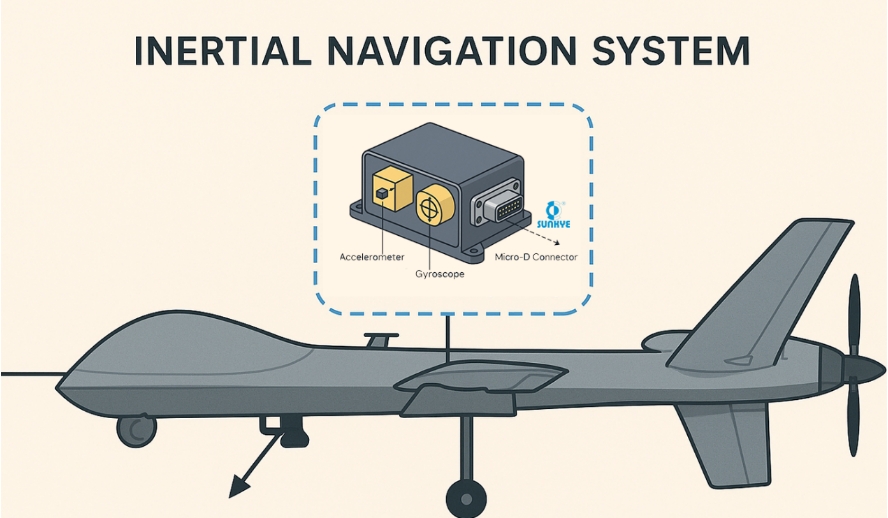
At the core of Inertial Navigation Systems for Aerospace and Space Exploration are two key components: accelerometers and gyroscopes.
- Accelerometers measure linear acceleration in multiple directions.
- Gyroscopes measure rotational movement and angular velocity.
Together, these sensors track every movement of the vehicle. By continuously integrating acceleration and rotation data over time, the system calculates the current position and velocity relative to a known starting point.
However, small measurement errors can accumulate over time, leading to “drift,” which is why these systems are often combined with GPS or star trackers when available.
Applications in Aerospace Engineering
In aviation and defense, Inertial Navigation Systems for Aerospace and Space Exploration play a critical role in ensuring accurate navigation even in challenging conditions.
Commercial and Military Aircraft
Modern aircraft use inertial navigation as a backup or primary navigation system when GPS signals are weak or jammed. This ensures safe flight operations across long distances and remote regions.
Missile and Drone Guidance
Missiles and unmanned aerial vehicles rely heavily on inertial systems for precision targeting, especially in environments where external signals cannot be trusted.
Role in Space Exploration Missions
Space missions are one of the most demanding environments for navigation technology. Once a spacecraft leaves Earth’s orbit, GPS becomes unavailable, making autonomous systems essential.
In Inertial Navigation Systems for Aerospace and Space Exploration, spacecraft use inertial measurement units (IMUs) to:
- Maintain correct orientation in space
- Guide trajectory corrections during flight
- Support docking maneuvers with space stations
- Assist landing procedures on planets or moons
For example, during deep-space missions, inertial systems are often combined with star trackers to improve long-term accuracy.
Advantages and Limitations
While Inertial Navigation Systems for Aerospace and Space Exploration offer unmatched independence, they also have limitations.
Advantages
- Operates without external signals
- Highly reliable in GPS-denied environments
- Works in space, underwater, and underground
- Provides real-time continuous navigation
Limitations
- Gradual error accumulation (drift)
- Requires periodic calibration or external correction
- High cost for high-precision systems
Despite these challenges, ongoing advancements in sensor technology are steadily improving accuracy and reducing drift.
Future Developments in Inertial Navigation
The future of Inertial Navigation Systems for Aerospace and Space Exploration is closely tied to improvements in micro-electromechanical systems (MEMS), quantum sensors, and AI-based correction algorithms.
Researchers are developing next-generation systems that can:
- Reduce drift through advanced filtering techniques
- Integrate seamlessly with satellite and optical navigation
- Operate with ultra-low power consumption for long-duration space missions
These innovations will be crucial for upcoming missions to Mars, the Moon, and beyond.
Conclusion
Inertial Navigation Systems for Aerospace and Space Exploration are fundamental to modern navigation in both atmospheric and extraterrestrial environments. Despite their limitations, their ability to function independently of external signals makes them indispensable for aircraft, missiles, and spacecraft. As technology continues to evolve, these systems will become even more accurate, reliable, and essential for future exploration missions.
